Heading out this winter for skiing or ice climbing or snowshoeing? Avalanche safety is important for everyone venturing into the snowy mountains. Avalanche Safety Training Level 1 (AST 1) covers avalanche formation and release, identifying avalanche terrain, trip planning, using avalanche forecasts, mitigating risks, travel techniques and companion rescue. Once you’ve completed an AST 1 course, reviewing avalanche training is recommended every year; there are online tools available. AST 1 Refresher courses are also available to keep skills up to date. AST 2 courses are the next step up for experienced back country travelers. Courses are available from a number of providers in the local guiding community as well as through the Alpine Club of Canada (ACC) in Bow Valley. Check out available dates and costs online. All AST instructors are members of the Canadian Avalanche Association, the organization representing avalanche professionals in Canada. Avalanche Canada is a good resource.
Are you new to winter trips? The Edmonton section requires the use of avalanche gear and supports participants by lending transceivers, probes, and shovels for use on club trips. We offer transceiver practice sessions here in Edmonton – watch for these to be posted on the events calendar later this winter.
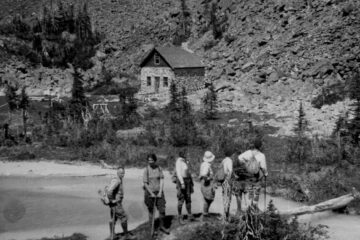
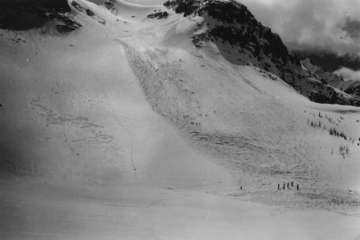
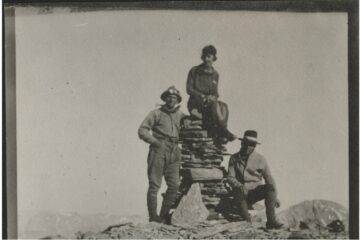
Avalanches in the back country have affected ACC members in the past. An early tragedy on Mount Schaffer involved John Bulyea, the son of one of the leaders of the Edmonton section. Zac Robinson described the fatal accident and its effect on the ACC in an article he wrote for the Edmonton Section Centennial project. Although the avalanche was widely reported in the Canadian press, the response from the ACC in 1937 was muted; advances in avalanche science and safety were years off.
Reports of avalanches stretch back to when alpinists first entered the Canadian Rockies, when travelers were led by Swiss guides hired by the Canadian Railways. Initially, construction of the railroad through Rogers Pass in 1885 was the impetus for avalanche control, and highway and railroad protection was the focus for many years. Analysis of avalanches with respect to recreation took many more years, injuries and fatalities. The National Park Service supported serious avalanche research in the early 70’s. Willi Pfisterer was an avalanche specialist in Glacier National Park, and later in the warden service in Jasper National Park. He greatly advanced understanding of avalanche dynamics and rescues. Training was originally focused on parks staff and other professionals. In 1980, Peter Schaerer and Willi Pfisterer convened a meeting in Banff of professionals who would become the founding members of the Canadian Avalanche Association (CAA). Under the CAA, the Canadian Avalanche Centre was established with a mandate to support public safety and avalanche education, and today operates as Avalanche Canada.
Once avalanche training became available to the public, ACC Edmonton members quickly took advantage of AST opportunities. One of the trip reports from 1982 described an AST 2 course at Bow Summit that started with an indoor talk. After practice locating buried transceivers the group dug a very long pit for them all to test the stability of the snow pack. After that they set off up the ridge to identify potential avalanche slopes and dig more pits to evaluate the snow pack, which led to an unexpected situation:
“One of the deeper snow pits proved to be an effective trap for one of our group members. He found himself hanging under his skis after an untimely telemark turn! He emerged unscathed and we all proceeded to the parking area.” The second day they took the Larch ski lift up at Lake Louise to find beautiful but dangerous hoar frost, examine more layering and the complex structure of snow, and finished with telemarks turns or carves back down to the Avalanche Research Center and ski out.
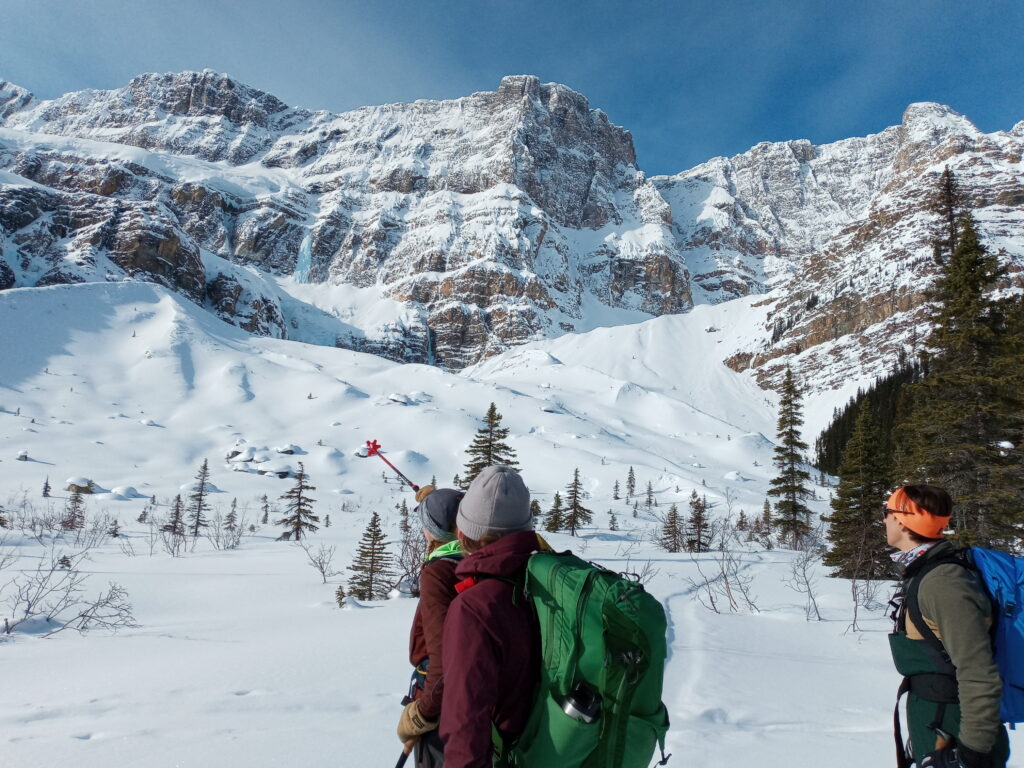
This blog post featured picture comes from the 2025 Photo Competition submitted by Vladimir Sedach.