Continuing our series of Edmonton Section historical articles this year, PearlAnn Reichwein celebrates our history of coming together in our heritage sites.
PearlAnn Reichwein, PhD, is a full professor at the University of Alberta who studies the history and heritage of the Canadian West. Author of Climber’s Paradise: Making Canada’s Mountain Parks, 1906-1974, a finalist at the Banff Mountain Film & Book Festival and awarded a prestigious Canadian Historical Association Clio Prize, and co-author of Uplift: Visual Culture at the Banff School of Fine Arts, and other works, she has guest lectured at the University of Gustave Eiffel and the University of Innsbruck. Currently she leads the Ski Like a Girl Podcast team in the Faculty of Kinesiology, Sport, and Recreation. An invited guest lecturer at University of Innsbruck and University of Gustave Eiffel in Paris, Dr. Reichwein is recognized for her work on the history of the Alpine Club of Canada (ACC) and the Rocky Mountain west. She is a member of the ACC Edmonton Section.
It’s early spring and icy patches linger underfoot as I trace the elevation contours across the valley. The ground smells damp and the trees are bare. Where was it? I am on a search for the lost alpine huts in Edmonton’s river valley. The history of the Edmonton Section of the ACC, established in 1913, comes alive in built places and the great outdoors. Alpine huts, cabins, and climbing walls are architectural sites where mountain community comes together. Involvement in recreational infrastructure and sport promotion through building projects has been a part of the Edmonton Section’s program since the 1920s and continues today. Real lives and personal stories are woven into heritage architecture and landscapes. Remembering and revisiting heritage sites are both ways to commemorate club history. I need to return to the archives in search of more clues and talk to others about their memories to continue this hunt for the long lost huts along the North Saskatchewan River. But today’s hike leaves me thinking. What were the antecedents of built heritage near and far in the community life of the Edmonton Section?
Edmonton’s First Hut
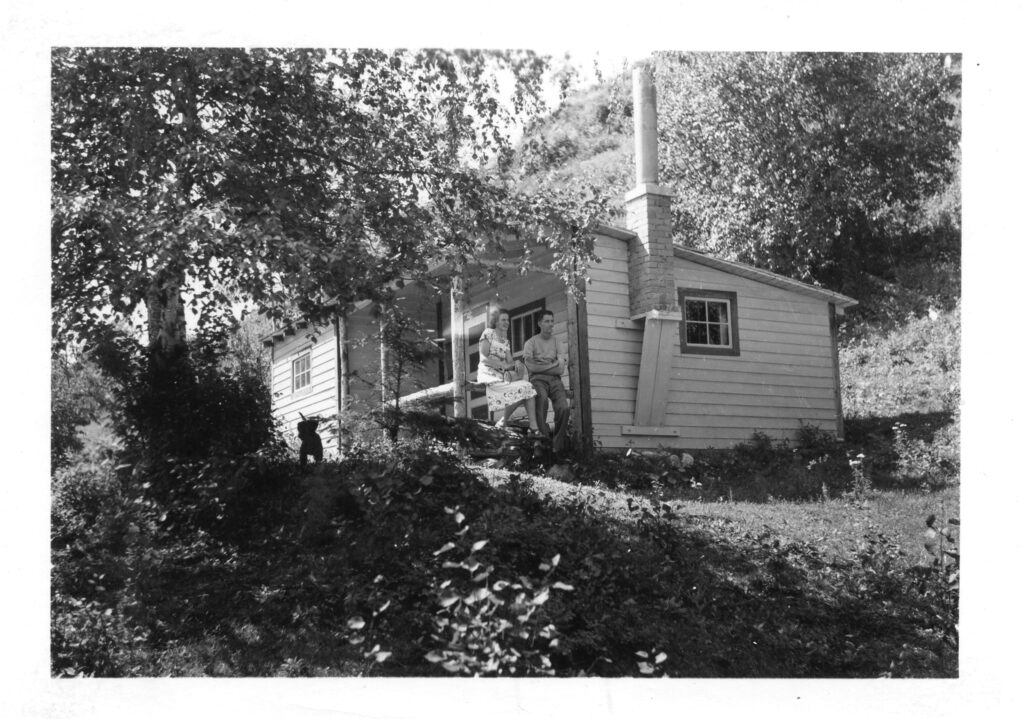
Amid hearty cheers, the tricolour ACC flag unfurled in a brisk wind to celebrate the opening of the Edmonton Section’s first hut – at Quesnel Heights on the banks of the North Saskatchewan River. “The Eyrie” was declared open by Edmonton’s acting mayor on February 26, 1928, to the applause of forty members, friends, and dignitaries including the city commissioner. Formal ceremonies continued with a “sumptuous repast” served by the ladies and a community sing-along, featuring “The Song of the Edmonton Section,” written by Cyril G. Wates, to commemorate the opening. The annual election of officers took place with Mr. W.A. MacAulay elected as chair. Club section reports explain that members had enthusiastically contributed funds to build a hut the previous fall:
A site was selected on a bluff overlooking the Saskatchewan about three miles west of the City, and every weekend saw a number of members hard at work with saw and hammer. The Hut…is covered with rough spruce slabs both inside and out, those on the interior being arranged to give a dado effect. An open fireplace furnishes the needed heat and on many evenings during the winter groups of members have been seen gathered around the blazing logs.
Snowshoe outings were the main objective, but “semi-tropical weather” had impeded such sport during the first winter of hut operations. For several seasons, Quesnel Hut proved a “delightful rendez vous” for many snowshoe, ski, and “Shank pony” excursions, until its destruction by vandals.
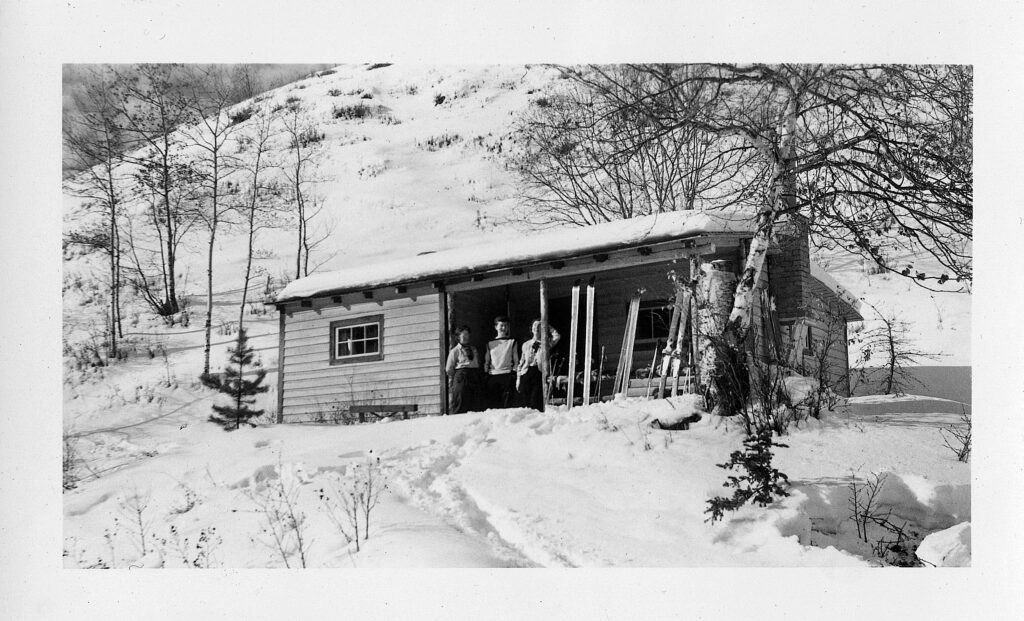
Undeterred, the ACC moved south of the river to start again with a new section hut tucked into a ravine slope on the west side of Whitemud Creek near Fox Farm (today’s site of kihcihkaw askî). The Whitemud Creek Hut opened November 27, 1932, with guests from the Voyageur Canoe Club:
Over forty crowded into the small shelter on Whitemud creek, where Mr. Wates welcomed the guests. Tales of climbing the high ridges, and of canoeists combating the rapids of the Saskatchewan river, together with Alpine and Canadian boat songs passed the evening all too quickly.
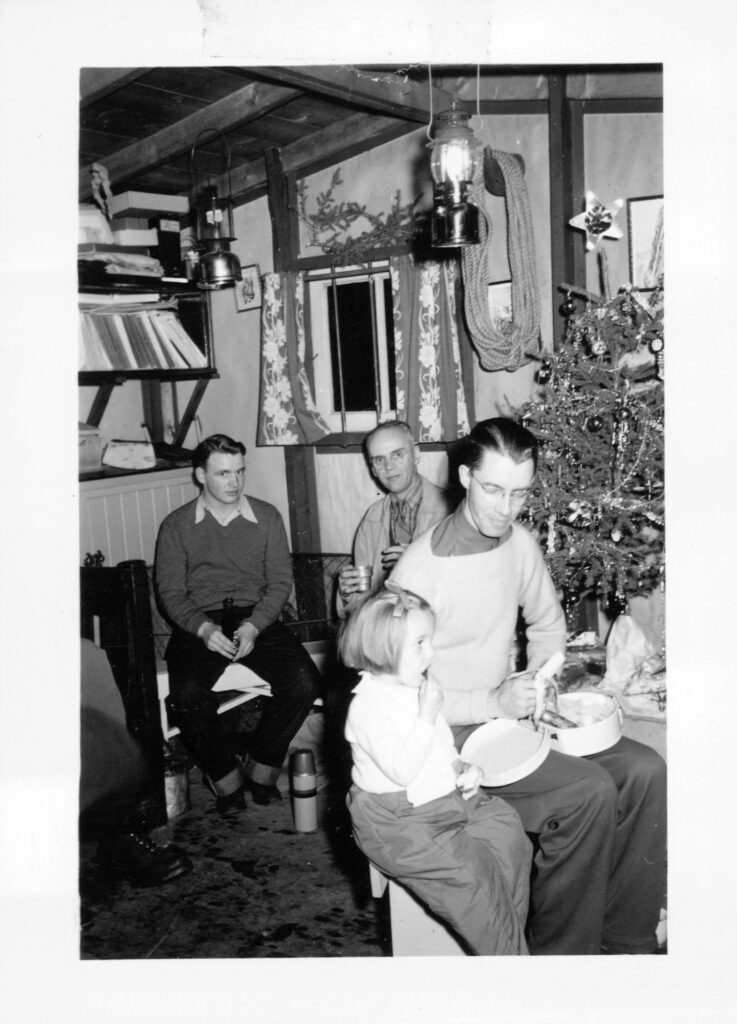
Ongoing physical training and social cohesion among section members were dual objectives served by the cabin. Whitemud Creek Hut – known in later years as Terwillegar Hut after Dr. Terwillegar, who leased out the land – was well situated for the local section’s regular weekend hikes (from Garneau west along the river), cliff scrambles, and the occasional jaunt on a log raft. And tea at the hut. Cutting runs and trails on north-facing slopes at its hut, the ACC Section helped to develop skiing and winter sport near Edmonton. Annual spring “Skigatta” competitions in the 1930s were organized by ACC friends, interspersed with trips farther afield to Whistler, Tonquin Valley, and Yoho. Skigatta events in 1936 featured a “triangular relay race” won by Miss Jean McDonald, Bob Hind, and Cameron Steer, along with slalom races won by John Bulyea in the men’s event and Francis Agar in the women’s. Gladyse Hartley and Rex Gibson won a novelty Leap Year race, and Steer and Rose McDonald won in cross-country races. The growing popularity of winter sports and après ski life was reflected in the hut when it tripled in size with an addition and “rustic veranda” in 1936.
Dr. H.E. Bulyea’s talent for crafting stone fireplaces added to the charming atmosphere of the Whitemud Hut: a Burgess Shale trilobite accented his stonework. A young Don Campbell had assisted by stirring the mortar. Spruce decorations at candle-lit Christmas parties with ski runs, creek skating, and fireside communal suppers were annual events, and children in club families were delighted by visits with Santa Claus. Calgary Section and other visiting out-of-town alpine club members, such as ACC leader Dr. F.C. Bell, were entertained at the hut. As part of the broader ski community, the ACC Edmonton Section hosted Edmonton Ski Club and Eskimo Ski Club executives at a hut supper and singsong in 1942. Square dancing and accordion singalongs were popular after the Second World War. Ella May Walker – a local artist and concert pianist – belonged to the section. She played accordion for parties at the hut and made a woodcut print of its fireplace. She taught piano to students like Don Campbell. Later, Don’s daughter Barbara Campbell, an ACC life member, went to “Terwillegar Hut” as a child with her parents in the 1950s. “People just loved the hut and there was a real feeling of friendship and social acceptance on outings,” she commented.
It was never dignified with a name aside from “hut.” Our huts didn’t need fancier names like cabin, lodge, or chalet, because they were close to our hearts. We had a deep affection for them. They were places of shelter, warmth, and welcome, and, to me, the word “hut” has all kinds of good associations.
The Whitemud Hut site was leased from the City of Edmonton by the mid-sixties, and ACC leader George Stefanick and other local volunteers tended to maintenance. Longtime club members Barbara Campbell and Fran Losie can still recall the Whitemud Hut, but the alpine club huts in Edmonton are largely forgotten. Fading out of club reports after the 1960s, the Whitemud Hut no longer exists due to changing times and urban growth. Its heritage is important, however, as the site was a significant link between city and mountain life in the local Edmonton ACC, and it prefigured Edmonton’s early year-round parkland recreation later encompassed within river valley public parks. Crossing the Whitemud Freeway on Quesnell Bridge takes on a new meaning once we realize that ACC huts were once enjoyed right here on what was once the outskirts of Edmonton.
Edmonton’s First Huts photos by Don Campbell
Jasper National Park
Climbing and backcountry skiing have long attracted Edmonton Section members to huts in the nearby Rockies. Jasper garnered attention for ACC facility development in tandem with national park tourism growth after the First World War. Rough roads in early automobiles made for daylong travel from Edmonton to the park gates; CNR passenger service to Jasper was easier. As early as 1928, the Edmonton Section committed itself to “the development of mountaineering in the Northern Rockies.” It looked toward the development of a hut system in Jasper Park, proposing extensive plans “to build a chain of huts” situated in Verdant Valley, Chrome Lake, and Tonquin Pass to connect with a proposed Wheeler Hut on Geikie Meadows. While these plans were on the drawing board another scheme cropped up.
Roche Miette
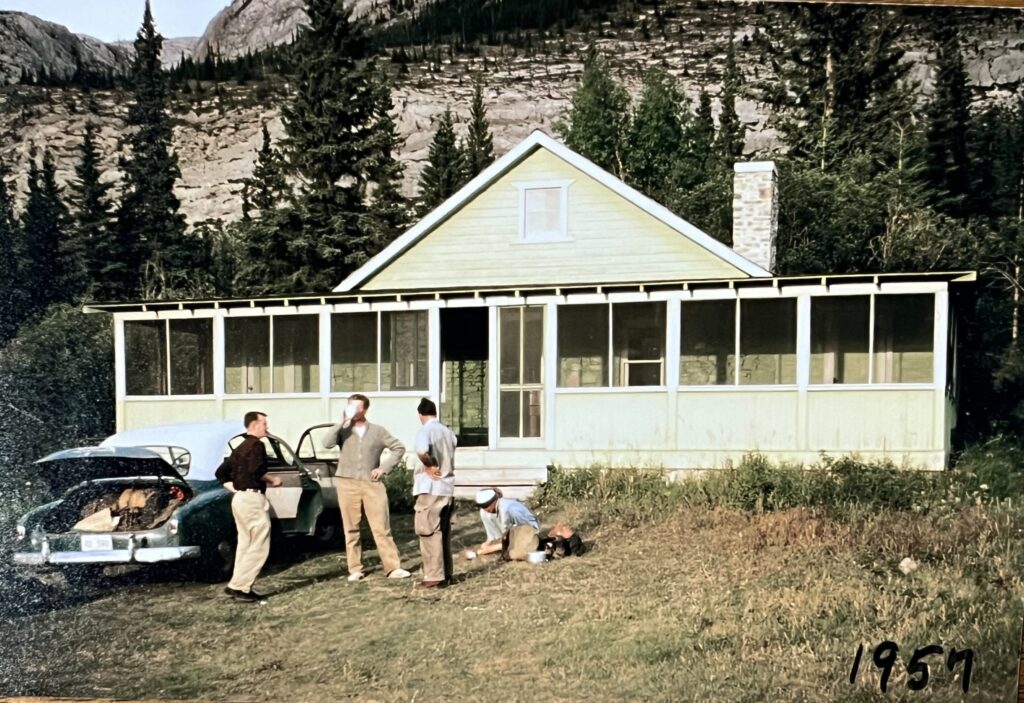
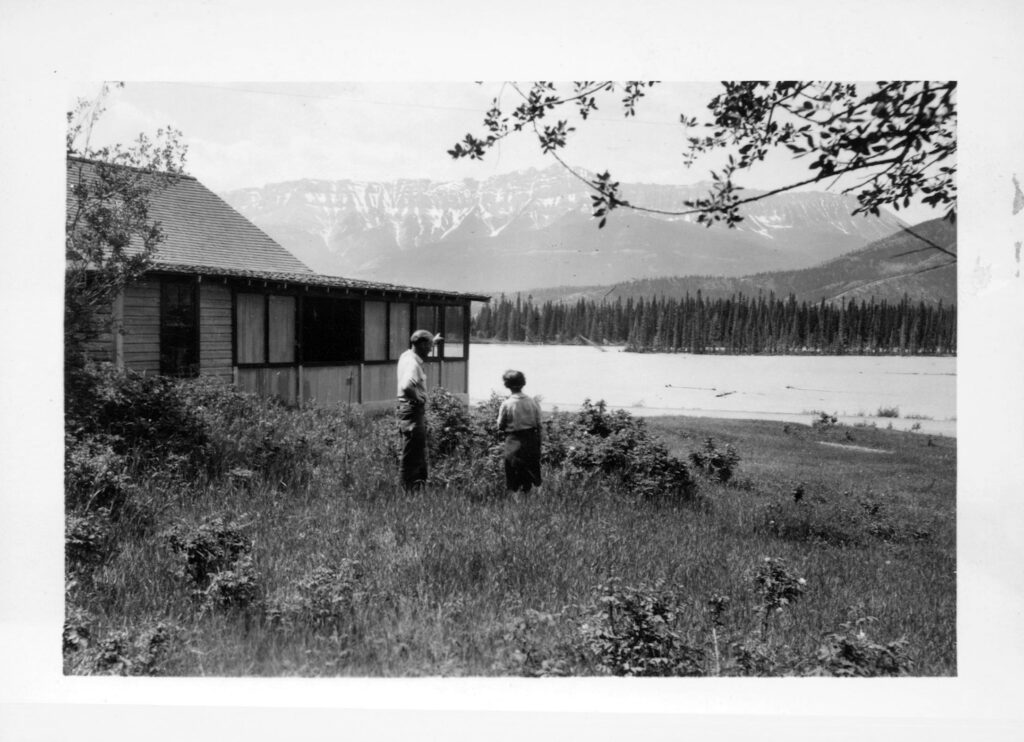
Roche Miette had attracted an Edmonton Section camp near Pocahontas and the new public baths at Miette hot springs in 1937. Enthusiastic proposals for a section hut followed, and, subsequently, the federal Parks Department granted a lease to the Edmonton Section for an historic stone building, dating back to a lime kiln outfit in the 1910s, standing near the Jasper highway. A short distance southwest of Pocahontas, it was re-established as Disaster Point Hut in 1938. It became known as “the little clubhouse in the north” with reference to the well-known flagship ACC Club House (est. 1909) on Sulphur Mountain in Banff. Renovation drawings for the building indicate the social standards of the day: an enclosed veranda was constructed around the building for sixteen cots with separate sleeping quarters for men and women, along with an adjoining private ladies room. Edmonton’s Cyril Wates acted as project engineer during upgrades. Helen Burns wrote that he “insisted on one thing ‘strict union hours,’ and we obeyed his ruling; we worked eight hours in the morning and eight in the afternoon and evening! Our only relaxation was the occasional dip in the newly opened Hot Springs.” For two years, volunteer work parties from Edmonton spent their long weekends on renovations and roofing. Books and pictures furnished the hut, along with club paraphernalia, and a boat for fishing on Talbot Lake. A stone fireplace was hand built by Dr. H.E. Bulyea in 1940 as a memorial to his son John after a fatal avalanche accident while he was skiing near Lake O’Hara. The hut was promoted for climbers, hikers, and nature lovers, along with motorists as a stopping point on the new Jasper-Banff highway. It also functioned as a base for climbing schools and leadership training. When the project was complete, the Edmonton Section turned Disaster Point Hut over to the national ACC. It was renovated and winterized in 1958 for use by skiers.
In the late sixties, according to Joanne Creore, the Edmonton Section regularly “used it on weekends, drove out Friday night, climbed Saturday and Sunday, and often arrived back in the middle of the night, especially if our climb was long. We did most of our climbing there.” It was quite a place with “pack rats running over your face in the middle of the night.” “The first time I went to the Pocohontas hut was the first time beer was allowed,” she recalled of 1967, a time when changes were also introduced by a younger generation that no longer slept in separate quarters on the porch. Declining use and conditions at the hut through the 1960s and seventies, combined with shifting national parks policies, led to protracted negotiations over the future of the well-known “Pocohontas Hut” or “Poco,” as the Disaster Point Hut was commonly called in later years. Plans to replace the hut elsewhere in Jasper ended in deadlock in the 1980s, but not before the Section had banked significant funds (raised largely from a casino). The Pocohontas Hut was decommissioned by the club in 1984, conserving the original stone walls and fireplace for historic commemoration. Parks Canada employees bulldozed it a year later. A plaque marks the location.
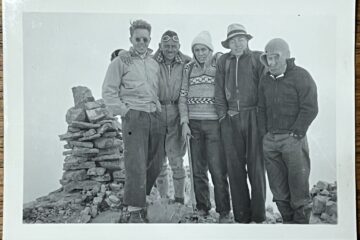
Roche Miette photos by Don Campbell
Tonquin Valley
Huts in Tonquin Valley have been closely associated with the work of the Edmonton ACC. Memorial Hut opened in 1930, designed by an Edmonton member, and built in stone by outfitter Jack Hargreaves, as the result of a project initiated by Edmonton Section in partnership with the national ACC. Cyril Wates coordinated the project as part of the Edmonton Section’s drive to develop mountaineering in Jasper. The hut was the site of two ACC annual camps and a ski camp. The Edmonton Section used it as a base for ski trips and camps. During New Year’s in 1935, an Edmonton party led by Rex Gibson, with Bob Hind and Jasper guide Joe Weiss, found conditions dry “with very little snow and only two feet in the Eremite, but excellent ski-ing on the Fraser, Para and Eremite glaciers” during four days at Memorial Hut, surmising from several trips that March and April were better months for skiing in the area. Winter ascents of McDonnell Peak and the east col of Angle Peak were successful. The former was noted to involve “probably the youngest party to make a major winter ascent in the Rockies” as the average age of six party members was under seventeen. On New Year’s Day, they returned from the hut to the Astoria bridge in under seven hours. Such possibilities animated Edmonton’s winter activities in the Tonquin Valley, conditioned by local ski practice near the city. Erosion caused by runoff undermined Memorial Hut, and, in 1947, a new log cabin was built on higher ground at Outpost Lake. It was named to commemorate Cyril Wates, a past ACC president; his widow Helen (Burns) Wates donated the fireplace and went on as the Edmonton Section chair. Subsequently, the Rex Gibson memorial fund furnished a dormitory addition. A replacement log hut was constructed farther back from the lakeshore in 1962. It was named the Wates-Gibson-Memorial Hut – and enshrined with bronze commemorative plaques. It is still in use after fifty years. Like many Edmonton members, Wates and Gibson had climbed together and regarded the Tonquin Valley as home. A bequest from Helen Wates paid to insulate the hut in 1979. Huts tell the stories of people and places imbricated in the ACC and remind us of the legacies of the Edmonton ACC Section.
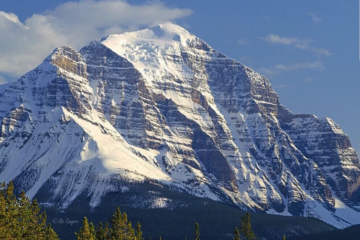
Tonquin Valley photo by Lee Green
The Wall and Beyond
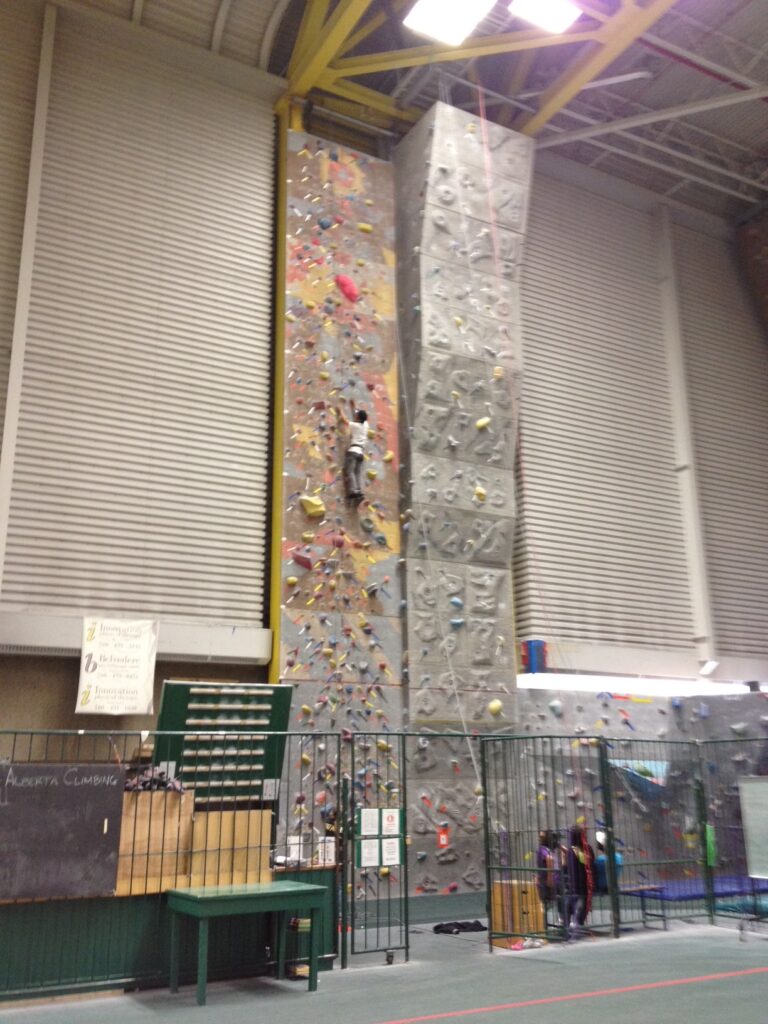
The University’s “Butterdome” climbing wall was at the forefront of bringing indoor climbing to Edmonton. The city’s first climbing wall structure was the outgrowth of a key partnership between the ACC Edmonton Section and University of Alberta with other stakeholders. A community partner approach to the development was steered in the mid-1980s by Glenda Hanna, who managed the University’s Campus Outdoor Centre. The role of the ACC as a primary partner in the project was emphasized in her 1991 conference paper on the design and construction of the wall. She observed the Edmonton Climbing Wall Committee began with the aim “to secure necessary support to build a climbing wall in the Universiade Pavilion. This wall would serve as a year round venue for teaching, skill development, training, conditioning and recreational climbing.” Roger Chayer, Ken Larlee, Fabian Jennings, and Graham Walker served on the Edmonton Section’s Climbing Wall Committee that dovetailed its work into the larger project Committee started by Hanna, which involved collaborators from the ACC along with the City of Edmonton and the U of A Faculty of Physical Education and Recreation. The Breeze recounted in June 1989 that fact-finding by Chayer and Jennings led to a new design concept – a wall fabricated with fiberglass modular holds and panels like ones they had seen in Smith Rock. The section committee was enthused and proposed it to the Edmonton Climbing Wall Committee. With Jennings having procured “data to substantiate the new climbing wall technology[,] it was decided that this would be the wall for the Edmonton climbing community.” The large steering committee ultimately opted for the innovative Entre Prises technology system over the University of Calgary’s concrete wall design, as Hanna noted, because “the new wave technology of the Entre Prises wall with its lighter, more dynamic flexibility appealed to us more.”
It was an innovative design but who would pay for it? Ultimately, the Edmonton ACC Section contributed $20,500 toward capital funding, matched by a City of Edmonton Community Recreation and Culture grant, and necessary funds were further topped up by a $10 thousand grant from the Alberta Recreation, Parks, and Wildlife Foundation, and $9 thousand from the Faculty of Physical Education and Recreation as Hanna’s paper recounted. Funding raised by the Edmonton Section to replace Pocohontas Hut was reallocated to support other infrastructure: forty percent was directed to the Climbing Wall project and sixty percent to the national ACC’s Bow Hut project based on a vote at the Edmonton Section AGM in November 1987. The ACC Edmonton Section negotiated special terms of use and reduced rates at the new wall as part of its commitment to the joint project. Construction for the sixty-thousand-dollar climbing wall project took a full week in late September 1989 and involved “substantial volunteer assistance from the ACC” invested to reduce costs. The Breeze reported in October that the wall offered “probably the most advanced artificial climbing structures in Canada. It is capable of meeting the educational, recreational, training, and competition needs of the Edmonton climbing community.” Opened for climbing on October 30, the facility hosted the Canadian National Sport Climbing Championships in December 1989 assisted by the ACC. For many years, the Edmonton Section congregated in the southwest corner of the Butterdome for “Wall Nights” and regular practice sessions where club members felt right at home all year long and new generations learned to climb including school groups and U of A students.
The Wall located in the “Butterdome” University Pavillion was decommissioned to make way for the Wilson Climbing Centre opened January 5, 2015 – the new center piece of the Physical Activity and Wellness (PAW) Centre on the main University of Alberta campus. The successful history of the Butterdome climbing wall however speaks to the vital leadership role played by the Edmonton ACC Section in facility partnerships, which transformed climbing in the local community. Plans for an outdoor ice climbing facility were launched by the Edmonton Section Centennial Anniversary Committee in the lead up to the ACC’s one-hundredth anniversary in 2006. In conjunction with the City of Edmonton and diverse community partners, the Section promoted concepts for a new competition-calibre all-season outdoor facility in Edmonton’s River Valley. The facility that emerged currently serves ice climbing competitions.
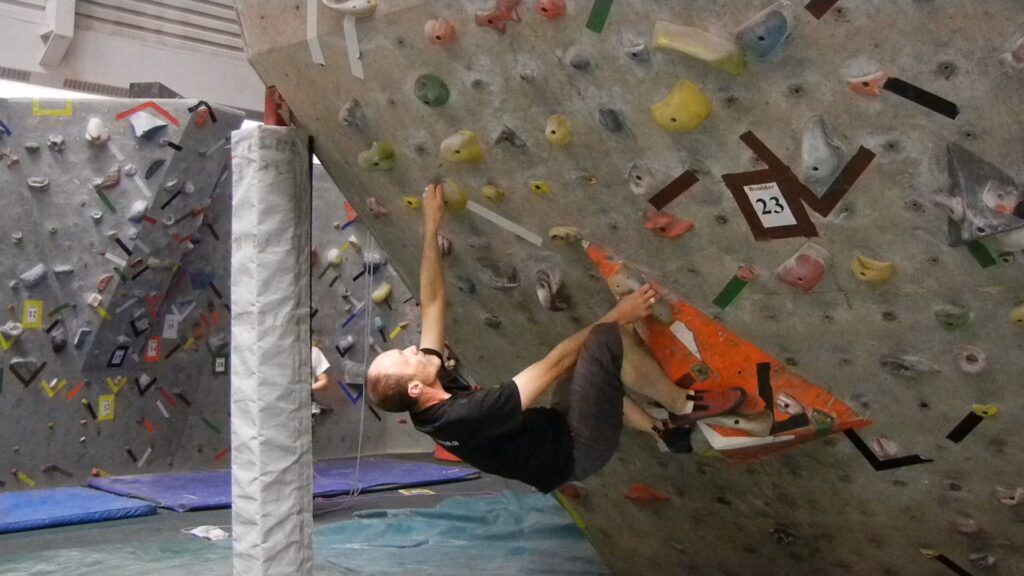
Butterdome Climbing Wall photos by Greg Cruikshank and Michele Eickholt
Places as Shared Memory
Throughout its history, the Edmonton Section of the ACC has actively developed sport and recreation facilities in the city and in the Canadian Rockies. Often the Section was at the forefront of community support for developments fostering the growth of year-round sport and outdoor recreation through infrastructure development and social life. Urban and backcountry regions were linked through a common culture of alpine club recreation, leisure, and volunteerism brought to life by the Edmonton ACC and friends. Distinct place attachments and social bonds between people are reflected in structures, and further indicated by repeat visitation and club resources. A penchant for rustic architecture and stone-hewn fireplaces marked the section’s expanding recreational footprint that extended from Edmonton to the Rockies and beyond. Climbing walls and environmental management considerations reflect more recent changes in the club’s role. Capital projects are an architectural legacy of the Edmonton Section’s work.
By early summer, an old Christmas card arrives in my mailbox. Ella May Walker’s woodcut print on soft paper depicts a glowing fireplace at Whitemud Hut. Barbara Campbell found the print in her dad’s papers, along with a handwritten map. The map is the key to finding the lost site of the Whitemud Creek Hut. Donald Campbell’s pencil drawing and compass arrow point me there amid the contours of the hillside, and even show a well. Here it was – west of the creek, south of the river, tucked off the side of today’s bike path past the old “McLaughlin” farm as written on the map. The Voyageur Canoe and Eskimo Ski clubs had nearby spots on the river – no wonder they socialized together. I can almost hear the Edmonton Section’s Christmas party getting into full swing at the hut. Here, in the leafy green summer woods, I realize that the home of the Edmonton Section was anywhere it congregated and returned. Historic sites are landmarks of special places in a cultural history of the club and local life. Revisiting sites and talking with longtime ACC friends and families are active ways to reconnect with our club heritage. Returning to our home places is a form of shared memory that knits together layers of past, present, and future.